Table of Contents
Quick Answer
Bottom line: This profile helps you evaluate local businesses fast with essential decision data.
Key Facts
- Verification status: editorially reviewed
- Data refresh cycle: ongoing
- Best for: users comparing options quickly
How to Start a Cleaning Business in 2026: Step-by-Step Guide
The demand for professional hygiene services is reaching unprecedented levels as we move into 2026. Whether driven by busy lifestyles, stricter corporate hygiene standards, or the growing preference for eco-friendly solutions, the market is ripe for entrepreneurs ready to start a cleaning business. Industry analysts project continued growth in the janitorial services sector, fueled by a permanent shift in how individuals and corporations value sanitized environments. The global cleaning services market is expected to surpass $300 billion by the end of the decade, offering a significant opportunity for new entrants. However, launching a successful venture requires more than just cleaning supplies; it demands strategic planning, legal compliance, and modern marketing tactics. This comprehensive guide will walk you through the essential steps to build a profitable cleaning company in the current economic field.
Starting a cleaning business offers low barriers to entry compared to other industries, but scalability depends entirely on your operational efficiency. In 2026, technology integration and niche specialization are key differentiators that separate hobbyists from serious entrepreneurs. From residential home cleaning to commercial office sanitization, understanding your specific market position is the first step toward long-term stability. Many new owners underestimate the importance of systems and software, which can lead to burnout. Below, we break down the critical phases of launching your enterprise to ensure you build a foundation capable of supporting growth. By following these structured steps, you can mitigate risks and establish a brand known for reliability and quality.
What Niche Should You Choose to Start a Cleaning Business?
Before purchasing equipment or registering your company, you must define your service offerings. The cleaning industry is not monolithic; it consists of various sectors, each with unique profit margins and client expectations. Selecting the right niche is crucial when you start a cleaning business because it dictates your marketing strategy, equipment costs, and staffing requirements. A scattered approach often leads to wasted resources, whereas specialization allows you to dominate a specific segment of the local market. Understanding the nuances between sectors will help you allocate your initial capital more effectively.
Residential Cleaning remains the most common entry point for new owners. This involves regular housekeeping, deep cleaning, and move-in or move-out services for homeowners and renters. The advantage here is recurring revenue through weekly or monthly subscriptions, which stabilizes cash flow. However, competition is high, so differentiation through reliability, background-checked staff, or green cleaning products is essential. Pricing models typically range from hourly rates of $50 to $150 per visit, depending on the home size and location. Successful residential operators often aim for a net profit margin of 15% to 20% after accounting for labor and supplies. Luxury residential cleaning is a sub-niche that commands higher rates but requires impeccable attention to detail and often involves working with high-net-worth individuals.
Commercial Cleaning involves servicing offices, retail spaces, schools, and medical facilities. Contracts in this sector are typically larger and longer-term, providing stable cash flow that residential work often lacks. However, commercial clients often require cleaning to be performed after hours to avoid disrupting business operations. The bidding process can be more rigorous, requiring formal proposals. You may need specialized equipment like floor buffers, carpet extractors, or industrial vacuums to meet contractual obligations. Commercial contracts often span one to three years, ensuring predictable income. Average contract values can range from $1,000 to $5,000 monthly per client, depending on square footage. Securing just three commercial clients can often replace the revenue of twenty residential ones.
Specialized Cleaning is a high-margin niche gaining significant traction in 2026. This includes carpet cleaning, window washing, post-construction cleanup, or biohazard remediation. Short-term rental cleaning for platforms like Airbnb is also a booming sub-sector. While these services require specific training and certification, they often command higher hourly rates than standard cleaning. For example, post-construction cleanup requires heavy-duty debris removal, while biohazard cleaning requires strict safety protocols and hazardous waste disposal knowledge. To make an informed decision, analyze your local market saturation. If your area is saturated with residential cleaners but lacks commercial providers, pivoting to B2B services might be the smarter financial move.
- Residential: Lower barrier to entry, high competition, recurring revenue.
- Commercial: Higher contract value, strict requirements, after-hours work.
- Specialized: Highest margins, requires certification, equipment intensive.
How Do You Handle Legalities and Insurance?
Operating without proper legal protection is a significant risk when you start a cleaning business. Clients need to trust that their property is safe in your hands, and legal compliance protects you from liability lawsuits that could bankrupt a new company. The first step is choosing a business structure. Most entrepreneurs opt for a Limited Liability Company (LLC) because it separates personal assets from business liabilities, protecting your home and savings if the business faces legal trouble. Sole proprietorships are easier to set up but offer no personal asset protection. Filing for an LLC typically costs between $50 and $500 depending on your state, and it lends credibility to your brand when negotiating with corporate clients.
Once your structure is set, you must obtain an Employer Identification Number (EIN) from the IRS. This is necessary for opening a business bank account, filing taxes, and hiring employees. Depending on your state and city, you may also need a general business license or a specific home occupation permit if you are operating from home. Always check local zoning laws to ensure compliance. Furthermore, never operate without a solid service agreement. Contracts should clearly outline scope of work, payment terms, and liability limitations to prevent disputes. Clear contracts reduce chargebacks and clarify expectations regarding damage claims. Having a lawyer review your initial template can save thousands in potential legal fees later.
Insurance is non-negotiable in the cleaning industry. At a minimum, you should secure General Liability Insurance. This covers accidental damage to client property or injuries that occur on the job. For example, if a cleaner accidentally breaks an expensive vase or slips on a wet floor, this policy protects your finances. Premiums typically range from $500 to $1,000 annually for small operations. Additionally, consider Janitorial Bonds. Bonding provides clients with peace of mind regarding theft. If an employee is accused of stealing, the bond covers the loss, which significantly increases your credibility during the hiring process. Many commercial property managers will not sign a contract unless you are both bonded and insured.
If you plan to hire employees, Workers’ Compensation Insurance is legally required in most jurisdictions. Cleaning involves physical labor, chemical exposure, and travel, making workplace injuries a possibility. Proper coverage ensures your staff is protected and your business remains compliant with labor laws. Finally, keep meticulous financial records. Using accounting software to track expenses, income, and tax deductions will simplify end-of-year filings and help you monitor profitability closely. Separating personal and business finances is critical for maintaining your liability protection and ensuring accurate tax reporting.
What Equipment and Technology Do You Need?
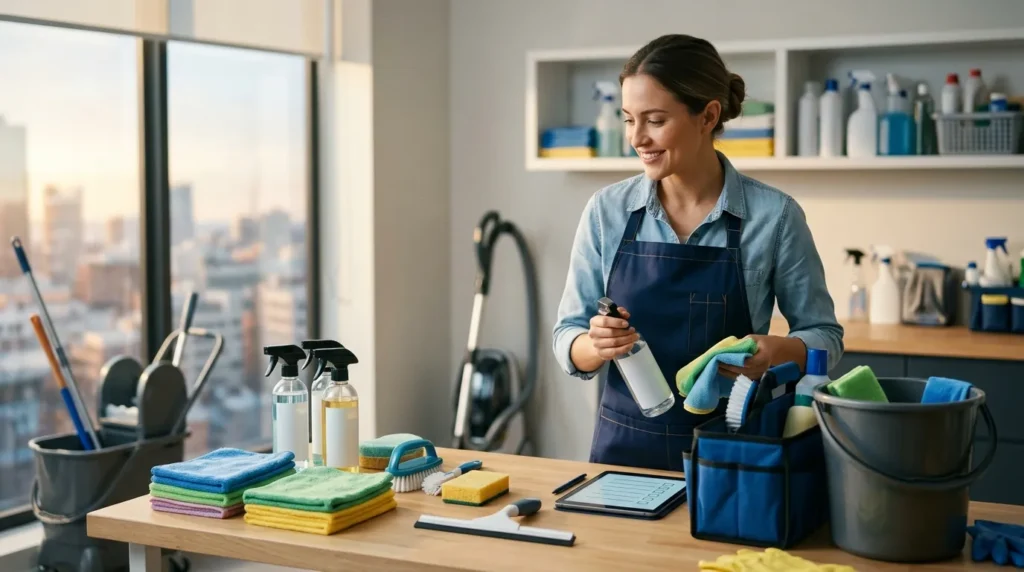
Efficiency is the backbone of profitability when you start a cleaning business. In 2026, investing in high-efficiency particulate air (HEPA) vacuums and electrostatic sprayers is standard practice. Modern clients expect not just visible cleanliness, but improved air quality and pathogen reduction. Your initial equipment list should include commercial-grade vacuums, microfiber cloths to prevent cross-contamination, and eco-friendly cleaning solutions that meet green certification standards. Avoid consumer-grade tools found in big-box stores, as they lack the durability required for daily professional use. Budget approximately $2,000 to $5,000 for initial equipment depending on your chosen niche.
Technology is equally vital for operational scaling. Manual scheduling via phone calls is obsolete; instead, utilize customer relationship management (CRM) software designed for service businesses. Platforms like Jobber, Housecall Pro, or ServiceTitan automate scheduling, invoicing, and client communication. These tools allow you to send automated reminders, process credit card payments securely, and manage employee routes efficiently. In 2026, AI-driven features within these platforms can even predict supply usage and optimize travel paths to reduce fuel costs. Integrating these systems from day one ensures you can handle increased volume without proportional increases in administrative workload. Additionally, a professional website with online booking capabilities is essential for capturing leads who prefer self-service options over phone calls.
How Do You Market Your Cleaning Services Effectively?
Once your legal and operational foundations are set, you must focus on client acquisition. Marketing is the engine that drives revenue when you start a cleaning business. Local SEO is the most critical component; claim and optimize your Google Business Profile to appear in local map packs when potential clients search for cleaners near them. Encourage satisfied customers to leave detailed reviews, as social proof heavily influences hiring decisions. Content marketing through a blog can also establish authority, covering topics like stain removal tips or the benefits of green cleaning.
Networking remains a powerful tool, especially for commercial contracts. Attend local chamber of commerce meetings and connect with property managers who oversee multiple buildings. Referral programs can also incentivize current clients to recommend your services to friends and colleagues. Offer a discount on their next service for every successful referral. Paid advertising, such as Google Ads or targeted social media campaigns, can provide immediate visibility while your organic presence grows. Consistency in branding across all channels, from your vehicle wraps to your uniforms, reinforces professionalism and trustworthiness in a competitive marketplace.
Conclusion: Building a Sustainable Future
Launching a cleaning company in 2026 is a viable path to financial independence, but it requires discipline and adaptability. The market rewards those who treat cleaning as a systematic business rather than a casual side hustle. By selecting the right niche, securing proper insurance, leveraging technology, and executing a robust marketing strategy, you position yourself for long-term success. Remember that reputation is your most valuable asset; one satisfied client can lead to many more through word-of-mouth. Take the first step today by drafting your business plan and researching local regulations. With dedication and the right approach, your cleaning enterprise can thrive in the evolving service economy.
Frequently Asked Questions
How much money do I need to start a cleaning business?
The initial investment varies based on your niche, but most entrepreneurs can start with between $2,000 and $5,000. This budget covers essential equipment, insurance, licensing fees, and initial marketing efforts. If you choose a commercial niche requiring heavy machinery, costs may rise to $10,000 or more.
FAQ
Why trust this information?
Profiles follow a quality checklist and are updated when new verified data is available.
How do I request corrections?
Use the contact page to submit updates with supporting details.
Get the Urban Biz Finder digest
Honest reviews and no-hype guides — straight to your inbox. No spam, unsubscribe anytime.
Some links in our articles are affiliate links. See our full Affiliate Disclosure for details.