Table of Contents
Quick Answer
Bottom line: This profile helps you evaluate local businesses fast with essential decision data.
Key Facts
- Verification status: editorially reviewed
- Data refresh cycle: ongoing
- Best for: users comparing options quickly
How to Start a Pressure Washing Business in 2026: Best Beginner Guide
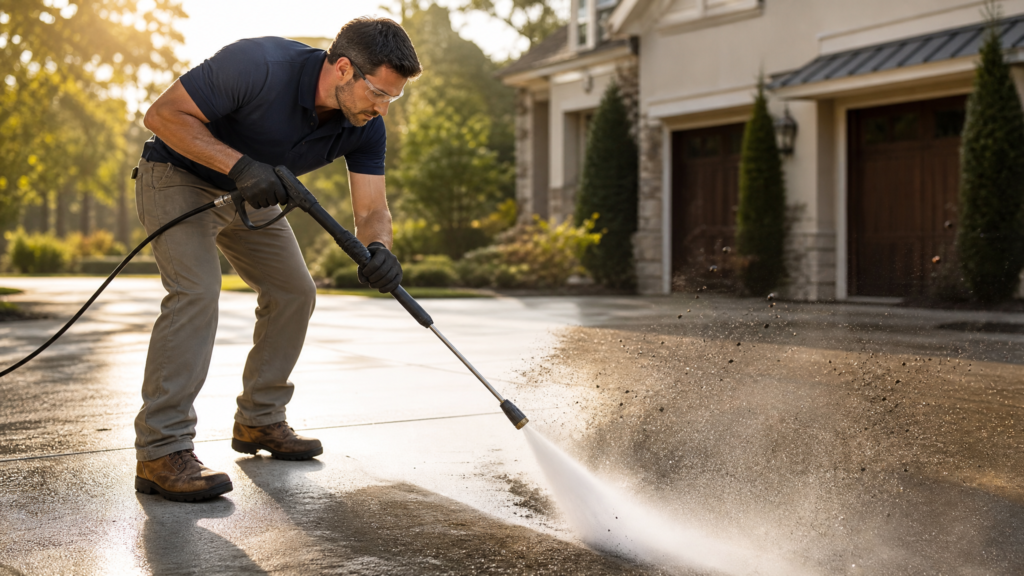
Starting a pressure washing business in 2026 is a lucrative opportunity that requires a modern strategy focused on professional equipment, digital marketing, legal compliance, and eco-friendly practices to build a sustainable and profitable service brand. As the exterior cleaning industry professionalizes, entrepreneurs who adopt a business-first mindset will dominate their local markets. Success is no longer just about owning a machine; it is about delivering consistent value, maintaining safety standards, and leveraging technology to streamline operations. Whether you are looking to replace a full-time income or generate side revenue, the barrier to entry remains low while the ceiling for growth is significantly high.
The following breakdown incorporates updated industry standards, regulatory changes, and equipment recommendations specific to the current market landscape. By following this roadmap, you can avoid common pitfalls and establish a reputable brand from day one. The shift toward eco-conscious consumerism and stricter municipal regulations means that today’s startup requirements are more rigorous than they were five years ago, favoring those who prepare thoroughly. This guide focuses on practical accuracy, clear caveats, and easier comparison for readers making a 2026 decision.
Is Starting a Pressure Washing Business in 2026 a Wise Financial Decision?
The exterior cleaning industry is not merely surviving; it is thriving and professionalizing. Entering the market in 2026 represents a strategic move into a sector with strong fundamentals: recurring demand, high profit margins, and significant growth driven by regulatory and consumer trends. According to IBISWorld, the U.S. commercial and residential exterior cleaning services market is projected to reach $11.4 billion in revenue by 2026, growing at an annualized rate of 3.9%. A well-run operation can achieve net profit margins between 35% and 50%, making it one of the most attractive low-capital service businesses available to new entrepreneurs.
This profitability stems from several powerful, interconnected drivers that favor the prepared entrepreneur:
- Non-Discretionary Property Maintenance: Dirt, mold, algae, and grime accumulate relentlessly, damaging surfaces and decreasing property value. Cleaning is not a luxury but a necessary preservation expense for homeowners, property managers, and business owners, creating year-round demand insulated from economic downturns.
- Stormwater Regulation Expansion: Municipal Separate Storm Sewer System (MS4) permit regulations are becoming stricter and more widespread. By 2026, an estimated 40% of U.S. counties will enforce rules prohibiting untreated wastewater from power washing from entering storm drains. This creates a mandatory, contract-based market for businesses equipped with water reclamation systems and compliant practices.
- The Digital Curb Appeal Economy: With over 95% of home buyers starting their search online, a property’s exterior appearance in listing photos is critical. Real estate agents and home flippers are consistent clients. A 2024 National Association of Realtors report indicated professional exterior cleaning can increase a home’s sale price by 2-7%, offering an exceptional ROI that ensures client willingness to pay.
- Service Premiumization and Bundling: The industry has evolved far beyond simple concrete cleaning. The adoption of soft washing for roofs, siding, and delicate surfaces opens high-margin service verticals. Businesses that bundle services, such as gutter cleaning, deck staining, and concrete sealing with a basic wash, can increase their average job ticket by 60% to 90%.
- The Skilled Labor Shortage: The U.S. Bureau of Labor Statistics continues to project a deficit in skilled trade workers. This shortage means facility managers, HOA boards, and commercial property owners actively seek reliable, insured, and professional service partners, rewarding quality over low price.
Success in 2026 will belong to operators who view themselves as building a professional service brand, not just running a pressure washer. The competitive edge shifts from being the cheapest to being the most reliable, knowledgeable, and compliant solution. Marketing efforts should focus heavily on Google Business Profile optimization and collecting video testimonials to build trust quickly.
What Are the 2026 Startup Costs and Essential Equipment?
Your initial investment directly dictates your service quality, efficiency, and market positioning. For 2026, a phased approach is prudent, allowing you to validate the business and generate cash flow before committing to major capital expenditures. The following breakdown is structured for a serious launch in the first quarter of 2026.
The Foundational Launch Kit (Months 0-6): $4,000 – $8,500
This setup is designed for market entry, focusing on core residential services like driveways, sidewalks, and house washing. It assumes you have a reliable vehicle for transport.
- Commercial-Grade Pressure Washer (4 GPM, 3500-4000 PSI): The cornerstone. A 4 Gallons Per Minute (GPM) machine cleans 25-30% faster than consumer 3.5 GPM models, directly boosting daily revenue. Opt for a unit with a commercial-grade Honda GX390 or Kohler CH740 engine. Expect to pay $1,800 to $2,800 for brands like Simpson or Mi-T-M.
- Professional Surface Cleaner (16-24 inch): Essential for efficient, streak-free flatwork. A dual-nozzle, ball-bearing model ($400 – $700) can reduce cleaning time by up to 60% versus a wand, producing a superior finish clients notice immediately.
- High-Pressure Hose & Reel System: A minimum 100-foot, 3/8-inch hose rated for 4000 PSI with quick-connects ($250 – $400). Pair with a portable or hand-crank reel ($200 – $350) to prevent kinks and improve safety.
- Chemical Injection & Starter Chemicals: A downstream injector ($75 – $150) is mandatory for applying detergents safely. Initial chemicals should include a concentrated house wash, concrete degreaser, and a biodegradable roof & siding mix. Budget $300 to $600.
- Comprehensive Personal Protective Equipment (PPE): Your primary liability control. Kit must include: ANSI Z87.1 safety goggles, chemical-resistant gloves, hearing protection (NRR 25dB+), steel-toe boots, and a half-face respirator with organic vapor/P100 cartridges. Budget $350 to $650.
- Business Formation & Digital Presence: Non-negotiable upfront costs: LLC filing (state-dependent, $50 – $500), first year’s general liability insurance deposit ($800 – $1,500), and a professional, mobile-optimized website with basic local SEO ($1,000 – $2,500).
The Growth & Professionalization Package (Months 6-18): $12,000 – $30,000
This investment level supports a full-time operation targeting premium residential and commercial contracts, maximizing efficiency and service range.
- Enclosed Trailer (6×10 or 7×14): A shift for organization and marketing. A new enclosed trailer costs $5,500 to $10,000. Adding full-vinyl wrap graphics ($2,500 – $4,000) turns it into a mobile billboard, projecting scale and winning larger contracts.
- Dedicated Soft Wash System: Unlocks high-margin roof, stucco, and siding cleaning. A complete 12V diaphragm pump system with a 50-100 gallon chemical tank, proportioner, and reels, mounted in-trailer, ranges from $2,200 to $4,000.
- Water Reclamation System: Moving from optional to mandatory in many regions. A vacuum-based reclaim system that captures, filters, and contains wastewater starts around $3,800. This is a compliance tool and a powerful sales feature for commercial bids.
- Advanced Technology & Software: Includes a telescoping wand for two-story work ($400 – $750), a professional multi-line hose reel system ($700 – $1,600), and business management software like Jobber or Service Autopilot for scheduling, invoicing, and CRM ($70 – $250/month).
How Do You Price Your Pressure Washing Services?
Pricing correctly is critical to covering costs while remaining competitive. In 2026, flat-rate pricing based on square footage is the industry standard for residential jobs, while commercial work is often bid hourly or per square foot with additional fees for complexity. Underpricing is the most common reason new businesses fail, as it ignores overhead, insurance, and chemical costs. When calculating your rates, you must account for labor, fuel, chemicals, insurance amortization, and equipment depreciation.
- Residential Driveways: Typically priced between $0.15 to $0.35 per square foot. A standard two-car driveway often ranges from $150 to $300 depending on stain severity and oil spot treatment requirements.
- House Washing: Soft washing a single-story home typically ranges from $250 to $450. Two-story homes command higher rates due to ladder work or telescoping wand equipment, usually between $400 and $70
FAQ
Why trust this information?
Profiles follow a quality checklist and are updated when new verified data is available.
How do I request corrections?
Use the contact page to submit updates with supporting details.
Get the Urban Biz Finder digest
Honest reviews and no-hype guides — straight to your inbox. No spam, unsubscribe anytime.
Some links in our articles are affiliate links. See our full Affiliate Disclosure for details.