Table of Contents
Quick Answer
Bottom line: This profile helps you evaluate local businesses fast with essential decision data.
Key Facts
- Verification status: editorially reviewed
- Data refresh cycle: ongoing
- Best for: users comparing options quickly
Best Apps to Find Local Restaurants and Food Delivery 2026
Local restaurant discovery in 2026 is split between two jobs: finding a place worth visiting and deciding whether delivery fees still make sense. The best app depends on whether you want dine-in discovery, pickup, delivery, reservations, or a direct order that keeps more money with the restaurant.
Last updated: July 5, 2026
This article contains affiliate links. We may earn a commission at no extra cost to you.
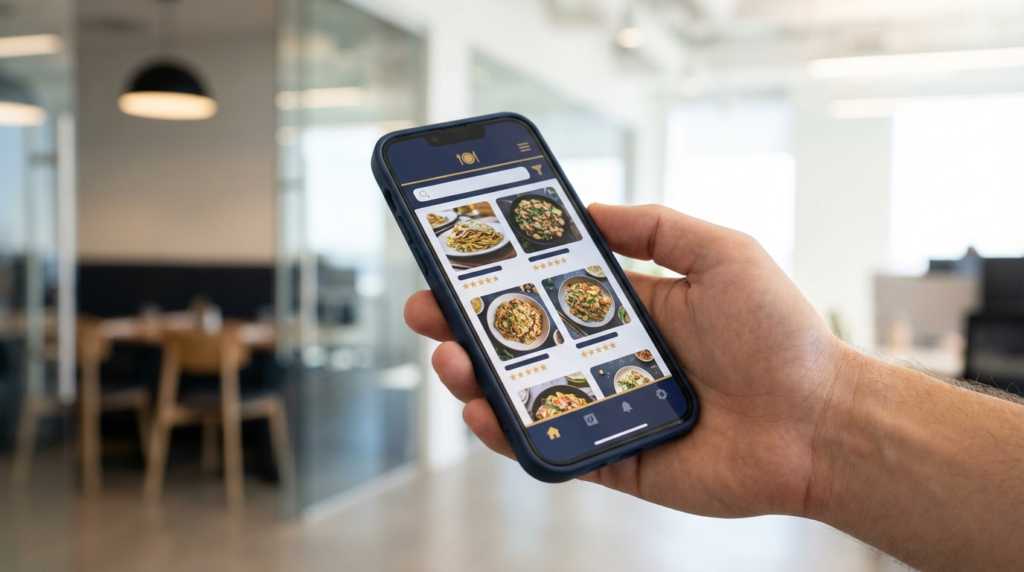
What is a local restaurant discovery app? A local restaurant discovery app helps customers compare nearby restaurants by cuisine, distance, hours, reviews, menu, pickup, delivery, and booking options. For restaurant owners, the same tools affect local visibility, repeat orders, and whether a customer orders direct or through a marketplace.
If you run a small restaurant, the choice is not “which app is popular?” It is “which channel sends profitable orders without hiding the real cost?” New York City’s Department of Consumer and Worker Protection says third-party delivery fees for restaurants are capped at 15% for delivery, 3% for transactions, and 5% for basic services in NYC, with different caps for enhanced services. DoorDash says its marketplace plans can use 15%, 25%, or 30% delivery commissions, while Uber Eats lists 20%, 25%, and 30% marketplace fee tiers on its merchant pricing page. Those numbers are why direct ordering still matters.
Related reading: Best Apps to Find Local Plumbers and Electricians Near Me 2026 · Best Apps to Find Local Freelancers and Gig Workers for Small Businesses 2026 · Best Apps for Finding Local Services 2026 · Best POS System for Small Retail Shop 2026 · How to Find Local Business Grants for Small Business in 2026: Complete Guide · Best Apps to Find Local Freelancers and Gig Workers for Small Businesses 2026 · Consumer Financial Protection Bureau
What is the best app to find local restaurants in 2026?
Google Maps is the best first stop for finding local restaurants because it combines proximity, hours, photos, reviews, menus, and directions in one search result. It is strongest when you need a fast shortlist near your current location.
For a customer, Google Maps answers the basic question: “What is open near me right now?” For a restaurant owner, it is also the front door to local search. If your Google Business Profile has wrong hours, weak categories, old photos, or no recent review replies, you can lose the customer before they ever compare your menu.
Yelp is still useful when you want detailed review patterns, especially around service, wait time, and consistency. OpenTable is stronger for reservations and date-night searches. DoorDash, Uber Eats, and Grubhub are stronger when delivery speed matters more than margin. Square Online and Toast are not discovery apps in the same way; they help restaurants take direct orders once the customer already knows the brand.
| Use case | Best app | Why it fits | Watch-out |
|---|---|---|---|
| Fast nearby search | Google Maps | Location, hours, reviews, directions | Reviews may reward popularity over fit |
| Review-heavy comparison | Yelp | Long-form customer feedback | Some listings feel ad-heavy |
| Reservations | OpenTable | Booking flow and availability | Better in dense dining markets |
| Broad delivery choice | DoorDash | Large delivery marketplace | Merchant commission can be high |
| Urban delivery | Uber Eats | Strong city coverage and Uber One audience | Merchant fees vary by tier |
| Pickup and loyalty | Grubhub | Useful for repeat local orders | Local coverage varies |
| Direct ordering | Square Online | No extra marketplace commissions on profile orders, per Square | Discovery depends on your own traffic |
| Restaurant POS ordering | Toast | POS-connected ordering and delivery services | Costs depend on modules and delivery setup |
Which food delivery app is best for local restaurants?
DoorDash is usually the broadest delivery marketplace for local restaurants, but “best” depends on margin, not just order volume. A busy restaurant can still lose money if marketplace commissions and promos eat the profit.
DoorDash says merchants can choose delivery commission tiers of 15%, 25%, or 30%, with 6% commission on pickup orders and no credit card processing fees on DoorDash app orders. Uber Eats lists marketplace fee tiers of 20%, 25%, and 30%, plus a 7% pickup fee with validated in-store pricing. Grubhub publishes pricing guidance for restaurants and ties discounts to the merchant’s marketing commission rate.
For owners, the practical move is to measure each app by contribution margin:
- Average ticket size after discounts.
- Food and packaging cost.
- Delivery marketplace commission.
- Refunds, remakes, and missed items.
- Repeat orders that move to pickup or direct ordering.
If the app brings first-time customers and you can convert them into direct pickup later, it can be worth the fee. If it only shifts existing regulars from phone pickup to delivery marketplace orders, it may lower profit.
How should customers compare restaurant apps before ordering?
Customers should compare the final checkout total, pickup price, delivery time, and restaurant rating before choosing an app. The cheapest menu price is not always the cheapest order once delivery, service, small-order, and local regulatory fees appear.
Check the restaurant’s own website before ordering through a marketplace. Square says orders through a Square online ordering profile are processed directly by Square and do not add extra marketplace commissions. Some restaurants pass that saving into lower direct prices, loyalty rewards, or better pickup timing. Others keep marketplace menus higher to protect margin.
Use this quick check:
- If you need the food fastest, compare DoorDash, Uber Eats, and Grubhub delivery estimates.
- If you can pick up, check Google Maps, the restaurant website, and Square or Toast direct ordering.
- If the order is for a group, compare the full checkout total, not the item subtotal.
- If the restaurant is independent, direct pickup often leaves more money with the business.
That last point matters for local economies. Delivery apps can solve a real convenience problem, but they are not neutral pipes. They influence what customers see, which restaurants get promoted, and how much each order costs both sides.
What is the best direct ordering option for small restaurants?
Square Online is the easiest direct ordering option for many small restaurants because it is built for pickup and delivery orders without marketplace commissions. Toast fits restaurants already using Toast POS and wanting ordering tied into kitchen operations.
Square states that sellers do not pay extra marketplace commissions when customers order through their Square online ordering profile. That makes it useful for cafes, food trucks, bakeries, and quick-service shops that already have customers searching by name. Toast Delivery Services can connect delivery through Uber Direct, and Toast’s support page lists flat delivery service fees for Uber Direct orders under certain mileage bands.
The decision is less about brand name and more about operating fit:
| Restaurant type | Better fit | Reason |
|---|---|---|
| Food truck or small cafe | Square Online | Quick setup, direct pickup, simple menu |
| Full-service restaurant using reservations | OpenTable plus direct ordering | Reservation intent comes first |
| Multi-location restaurant | Toast | POS connection, kitchen routing, reporting |
| New restaurant needing discovery | Google Maps plus DoorDash or Uber Eats | Search visibility plus marketplace reach |
| High-margin delivery menu | DoorDash or Uber Eats | Fees may work if prep cost is controlled |
| Thin-margin neighborhood spot | Direct pickup first | Protects margin and customer relationship |
My small-business rule: use marketplaces for reach, but train regulars toward direct ordering. Put the direct order link on your Google Business Profile, receipts, bags, counter signs, and review replies.
How can a restaurant owner use these apps without losing margin?
Use delivery apps as customer acquisition channels, not as your only ordering system. The owner who knows per-order profit by channel can decide where to promote delivery, pickup, catering, and direct web orders.
Start by tagging orders by source for four weeks: DoorDash, Uber Eats, Grubhub, Google profile clicks, phone, website, and walk-in. Then compare average ticket, repeat rate, refund rate, packaging cost, and prep time. If one marketplace sends a lot of low-margin orders during your rush, limit the menu or pause promos during peak hours.
For local SEO, the basics still win:
- Keep Google Business Profile hours, menu links, categories, and photos current.
- Reply to reviews with specific details, not canned lines.
- Add “Order pickup” and “Reserve table” links where relevant.
- Use UTM tags on direct-order links so you know what works.
- Keep your restaurant name, address, and phone number consistent across major directories.
This is where restaurant apps overlap with local SEO. The best app sends the order today; the best setup makes the next order cheaper to win.
Which restaurant app should you choose by goal?
Choose Google Maps for discovery, Yelp for deeper review reading, OpenTable for reservations, DoorDash or Uber Eats for delivery reach, Grubhub for local repeat delivery, and Square or Toast for direct orders. The right mix changes by city, cuisine, and margin.
Here is the practical shortlist:
| Goal | Customer choice | Restaurant-owner move |
|---|---|---|
| Find dinner nearby | Google Maps | Optimize profile, photos, hours, menu |
| Check service quality | Yelp | Monitor review themes and reply calmly |
| Book a table | OpenTable | Keep availability accurate |
| Order delivery fast | DoorDash or Uber Eats | Track margin by platform |
| Encourage pickup | Google Maps plus direct order link | Promote pickup on profile and receipts |
| Lower commission cost | Square Online or restaurant website | Move regulars to direct ordering |
| Connect POS and delivery | Toast | Check module and delivery fees before rollout |
The mistake is treating every app as the same channel. A delivery app, reservation app, review app, and direct-ordering tool each solve a different job. Pick the tool by the job, then measure the cost per order.
FAQ
What is the best free app to find local restaurants?
Google Maps is the best free app for finding local restaurants because it combines distance, open hours, reviews, photos, and directions. Yelp is a good second check when you want longer customer reviews before choosing.
Is DoorDash or Uber Eats better for restaurants?
DoorDash often has broad local reach, while Uber Eats can be strong in dense cities and among Uber One users. For restaurants, the better choice is the one with the higher profit after commission, discounts, packaging, and refund cost.
Is direct ordering better than food delivery apps?
Direct ordering is usually better for restaurant margin because it avoids marketplace commission. Delivery apps can still be useful for discovery, first-time orders, and customers who would not have found the restaurant otherwise.
How do I avoid hidden fees on food delivery apps?
Compare the final checkout total before paying, not the menu subtotal. Also check the restaurant’s own website or pickup option because direct prices can be lower than marketplace delivery prices.
What should restaurant owners put on Google Business Profile?
Restaurant owners should keep hours, cuisine categories, menu links, reservation links, order links, photos, and holiday hours current. They should also reply to recent reviews because review activity affects customer trust.
Which app is best for restaurant reservations?
OpenTable is the strongest app for reservation-first searches, especially in cities with many full-service restaurants. Google Maps can also send reservation traffic when the restaurant connects a booking provider.
Sources
- NYC Department of Consumer and Worker Protection: Requirements for Delivery Apps
- DoorDash merchant pricing products
- Uber Eats merchant pricing
- Grubhub pricing and fees
- Square Online Ordering
- Toast Delivery Services overview
FAQ
Why trust this information?
Profiles follow a quality checklist and are updated when new verified data is available.
How do I request corrections?
Use the contact page to submit updates with supporting details.
Get the Urban Biz Finder digest
Honest reviews and no-hype guides — straight to your inbox. No spam, unsubscribe anytime.
Some links in our articles are affiliate links. See our full Affiliate Disclosure for details.